

A Lecture on “Money Laundering … Challenges and How to Control”
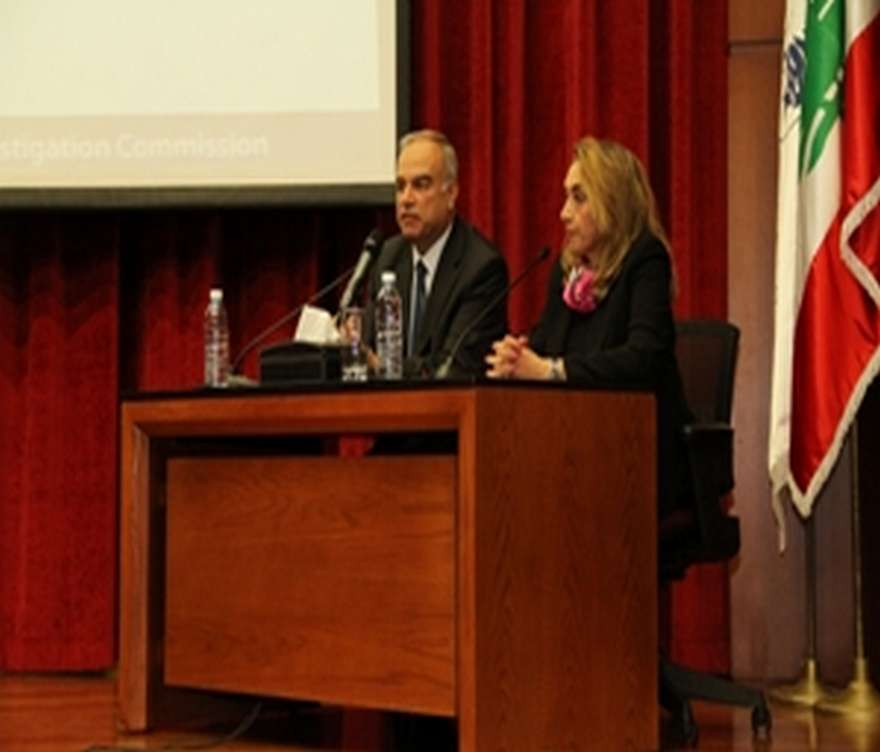
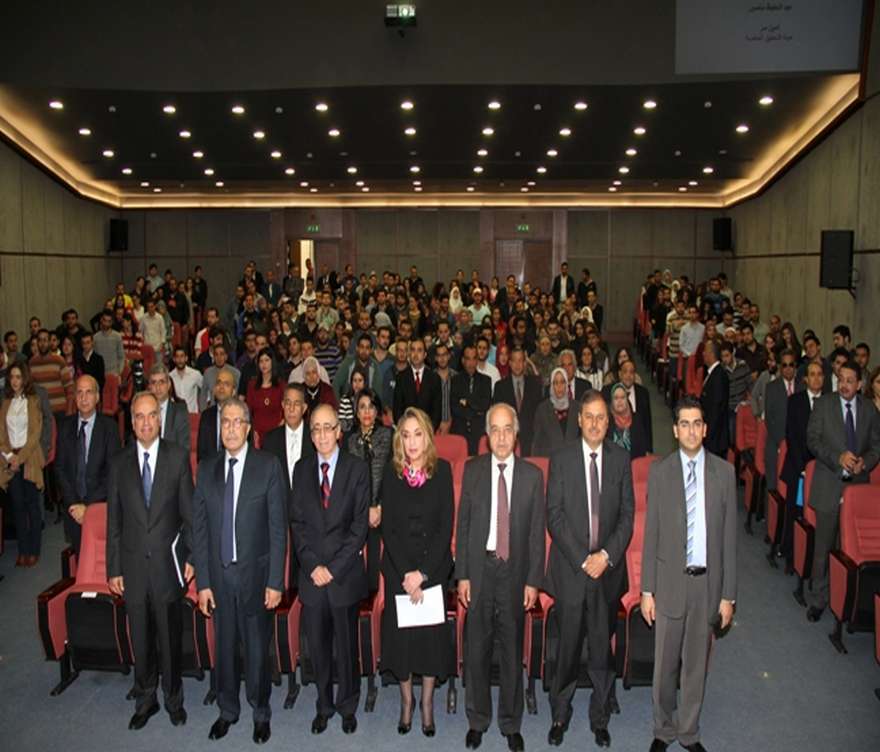
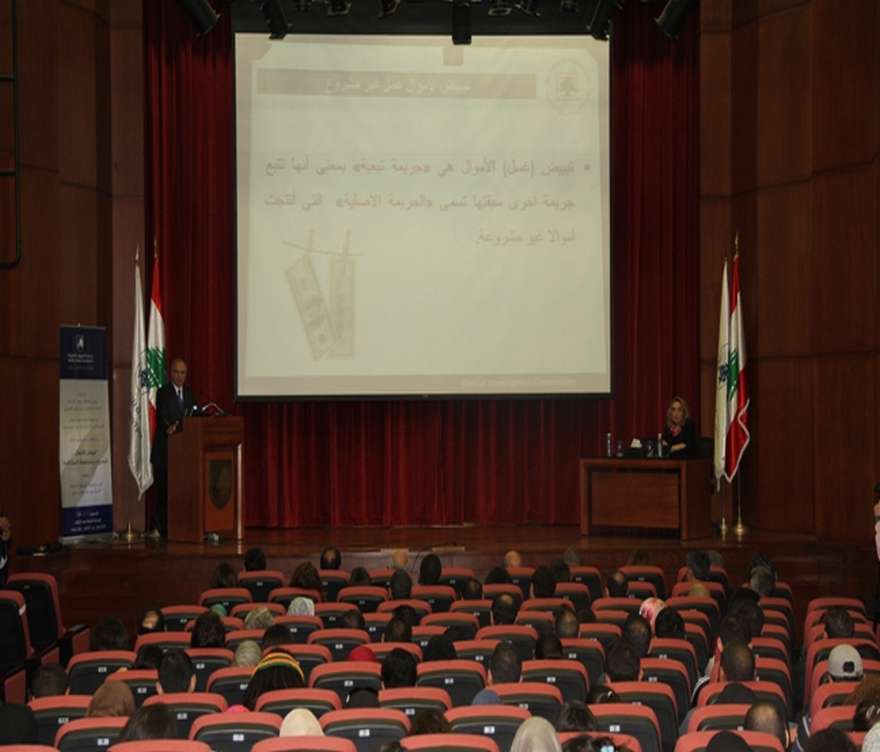
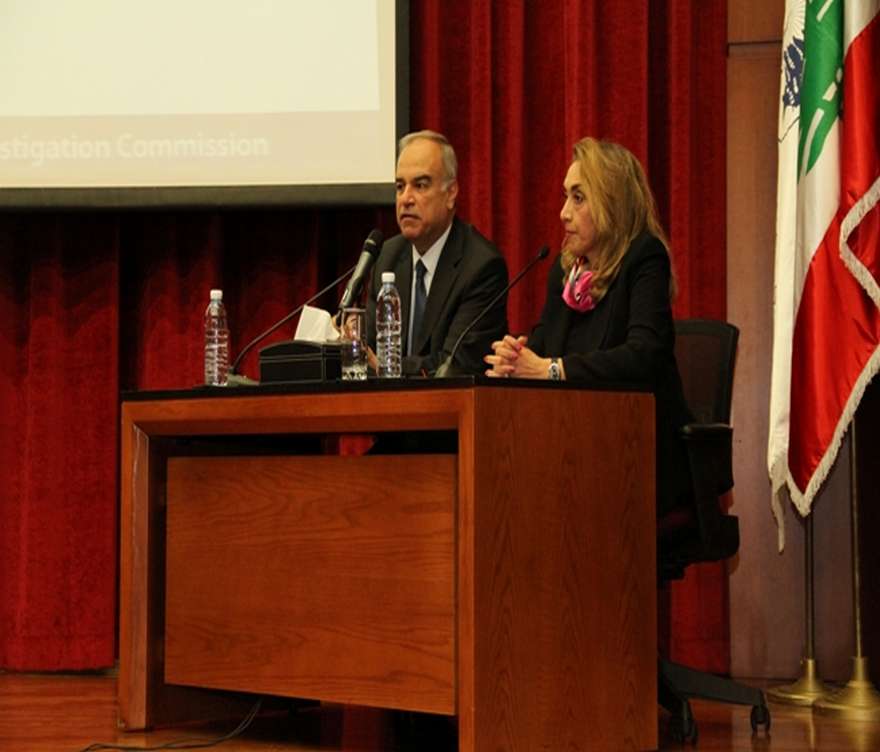
27 March 2014The Faculty of Business Administration at Beirut Arab University organized a lecture entitled “Money Laundering … Challenges and How to Control”, delivered by the Secretary General of the Special Investigation Commission (SIC) (the Lebanese Financial Intelligence Unit), Abdel Hafeez Mansour. The lecture was held at Beirut Arab University on the 27th of March, 2014 , and was attended by BAU Secretary General, Mr. Issam Houri, the Dean of the Faculty of Business Administration, Prof. Dr. Nihal Mostafa, the Director of Public Relations Administration, Mrs. Zina Ariss, and a number of financiers, economists, bank managers and businessmen.
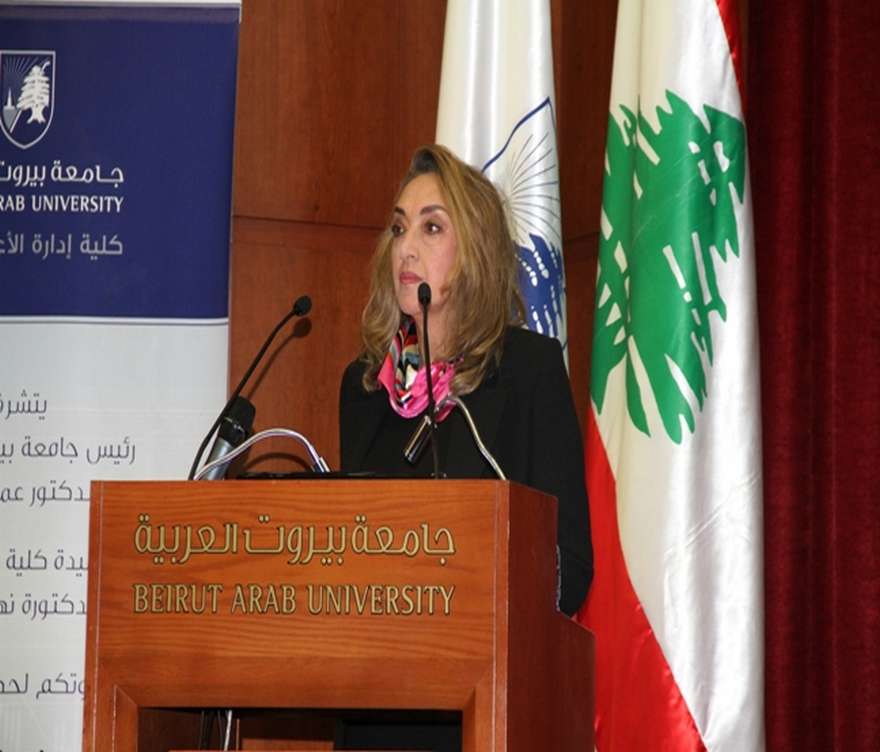
After the Lebanese national anthem and the BAU anthem were played, Prof. Dr. Nihal Mostafa gave a welcoming speech in which she spoke of the development of the term “Money Laundering” in economics. She enumerated various illegitimate financial transactions, such as depositing money in banks abroad, circulating money through real estate purchases, and establishing fake companies to justify the sources.
Prof. Mostafa highlighted that money laundering is a hidden economic alternative, known as black markets or shadow markets. These have given rise to the phenomenon of money laundering in the light of globalization and the prevalence of e-commerce.
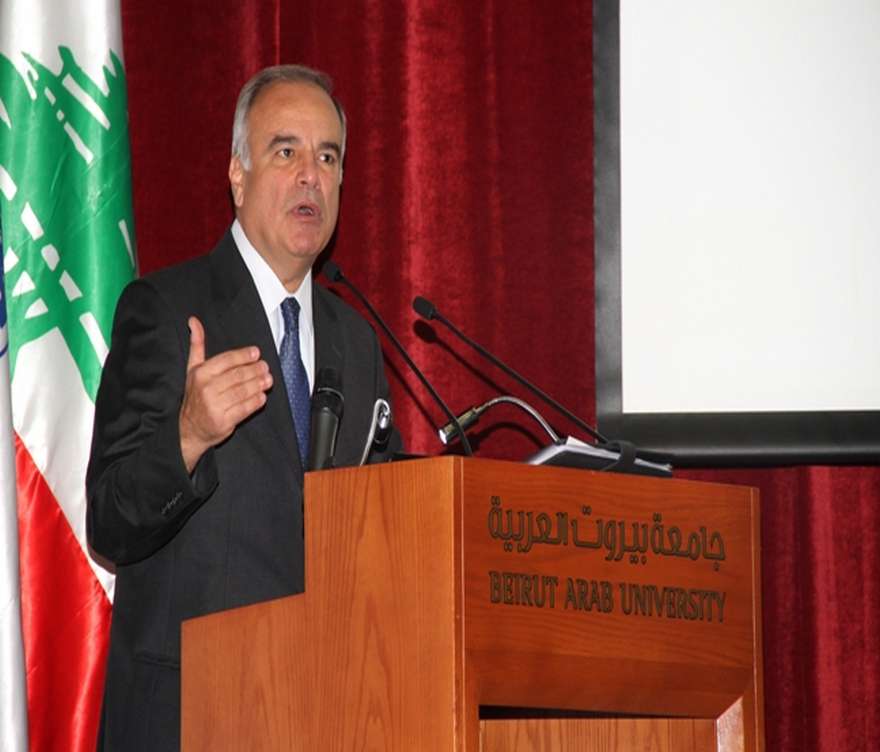
Mr. Abdel Hafeez Mansour then delivered his lecture. He first distinguished between the various terms used with reference to money laundering as used in different countries. It is definable as a dependent crime, in that it follows upon other original crimes such as terrorist acts, possessing weapons, drug trafficking, or forgery. Mansour highlighted the effects resulting from money laundering crimes which weaken the social environment, lead to economic instability and affect the integrity of financial institutions, which raising the rate of crimes and adversely affecting honest practices.
Mansour pointed out that the history of combating money laundering goes back to 1989, with the formation of an international task force that set criteria for combating and protecting global finances. Mansour further explained the procedures adopted by the task force through the evaluation of the performance of various countries every four years, aiming at ascertaining that these countries implement the recommendations.
Referring to the work done by the SIC, Mansour stated that the Commission is authorized to freeze transactions and suspect accounts, and monitor the operations reported by concerned authorities. He also pointed out that sanctions may be imposed upon overseas organizations, which may be penal or civil.
The lecture concluded with a discussion, where Mansour answered various questions and queries posed by members of the audience.