

Dr. Jihad Azour Lectures at Beirut Arab University- Tripoli Campus
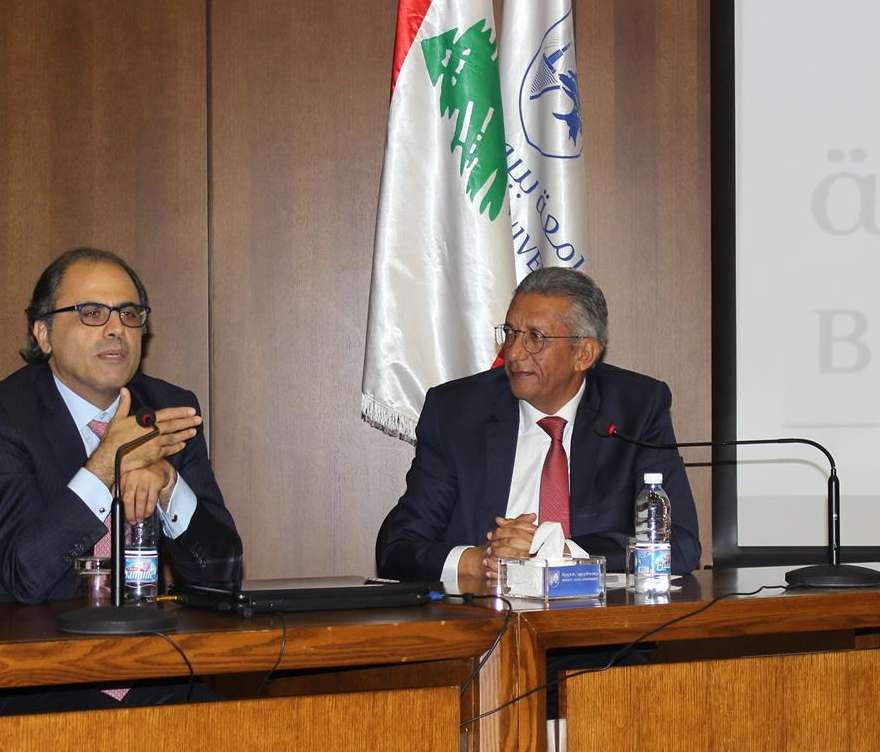
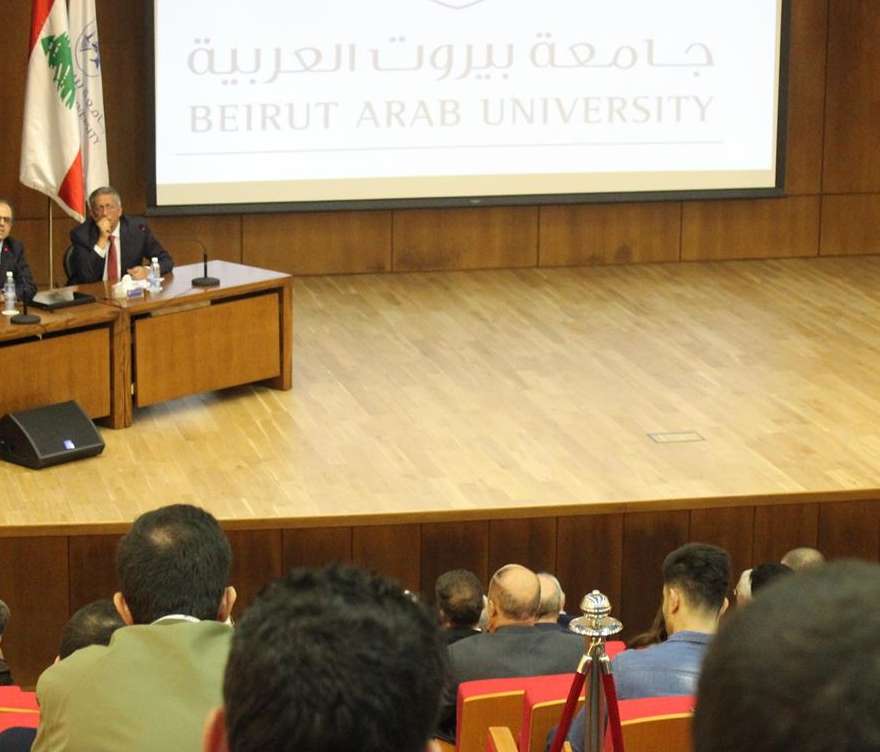
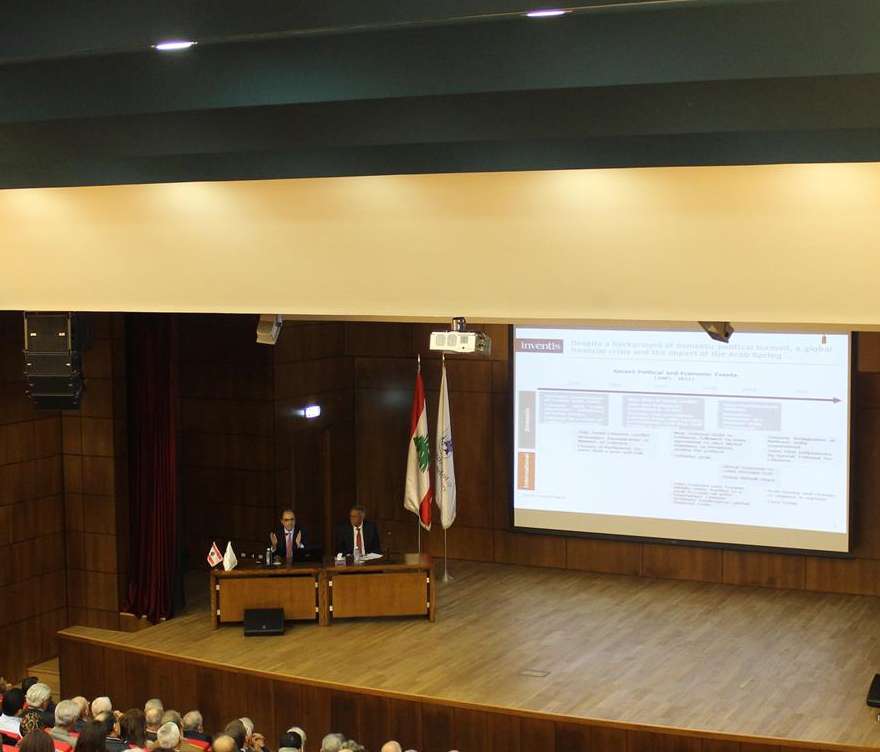
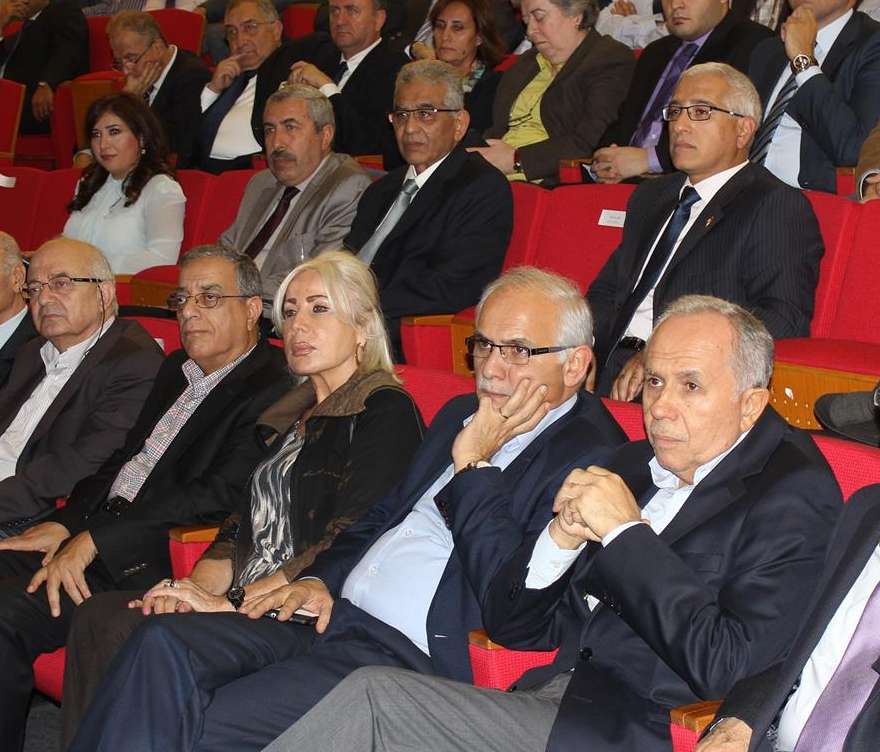
05 November 2015Beirut Arab University - Tripoli Branch hosted the Ex-Minister Dr. Jihad Azour, in a dialogue on the Lebanese economy at present and in the future, upon an invitation by Prof. Amr Galal El Adawi, BAU President. The event that was held on the 5th of November, 2015 was attended by Dr. Moustafa El Helwa, representing MP Mohamed Safadi; Dr. Saaddine Fakhouri, representing MP Robert Fadel; Elie Obeid, representing ex-Minister and ex-MP Jean Obeid; Eng. Amer Refai, head of the Tripoli Municipality; Mr. Toufic Dabbousi, head of the Chamber of Commerce, Industry and Agriculture; Judge Tarek Ziedeh, Vice-President of the Constitutional Council; Abdel Ghani Kabbara, HE Saad Hariri’s Advisor on the Affairs of the North; Mrs. Layla Salhab Karameh, President of the Businesswomen’s Assembly; and a crowd of interested people.
The event opened with the Lebanese National Anthem and the BAU anthem, followed by a welcoming note by Prof. Khaled Baghdadi, Vice President for Tripoli Branch Affairs who emphasized the importance of this event to throw light upon the Lebanese economy and envision a future for Lebanon, amidst local and regional developments.
Dr. Jihad Azour, in turn, raised the question of what the economic performance should be like. No doubt the productive sectors have played a major role, and we can observe Lebanon growing from 2007 to 2011 at a rate of 6.7% in comparison with other Arab states. He added that during the Arab Spring years, 2011-2015, Lebanon has witnessed a very difficult period due to the security challenges it faces, in particular in the wake of the crisis in Syria, followed by the presidential vacuum since 2014, and the drop in the petroleum prices.
According to Azour, Lebanon has shouldered many pressures during the last ten years, when compared to other countries, such as Tunisia, which had to face only one incident in 2011. This has led to the regression of the growth rate in Lebanon by about 2%. Highlighting Lebanon’s resilience and its ability to absorb crises, he argued that this ability is gradually diminishing. This is a first warning message to the politicians and public figures, namely that Lebanon’s endurance is decreasing year by year and day by day.