

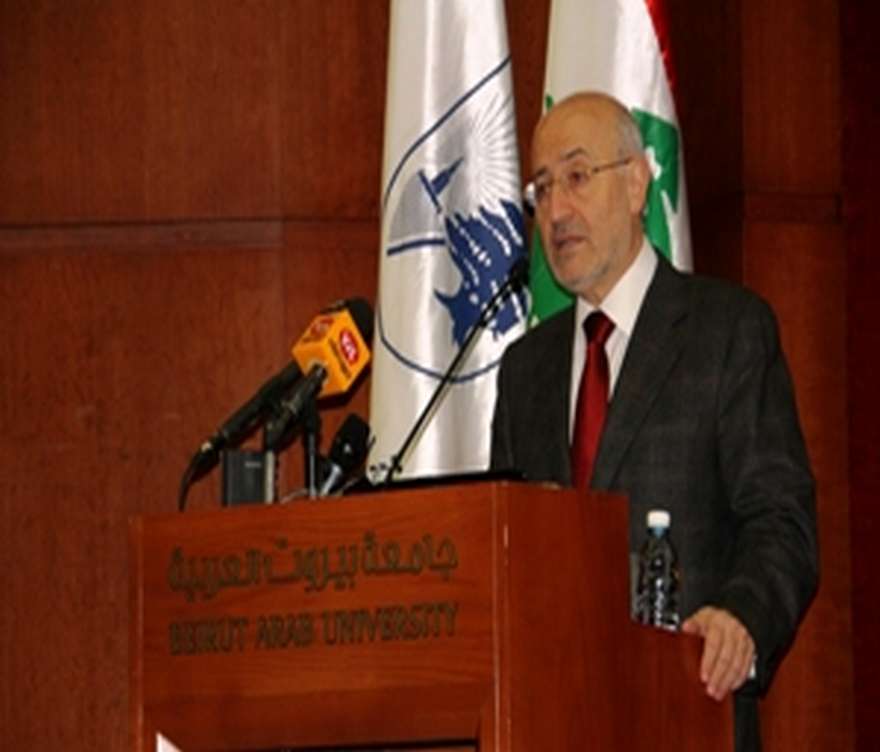
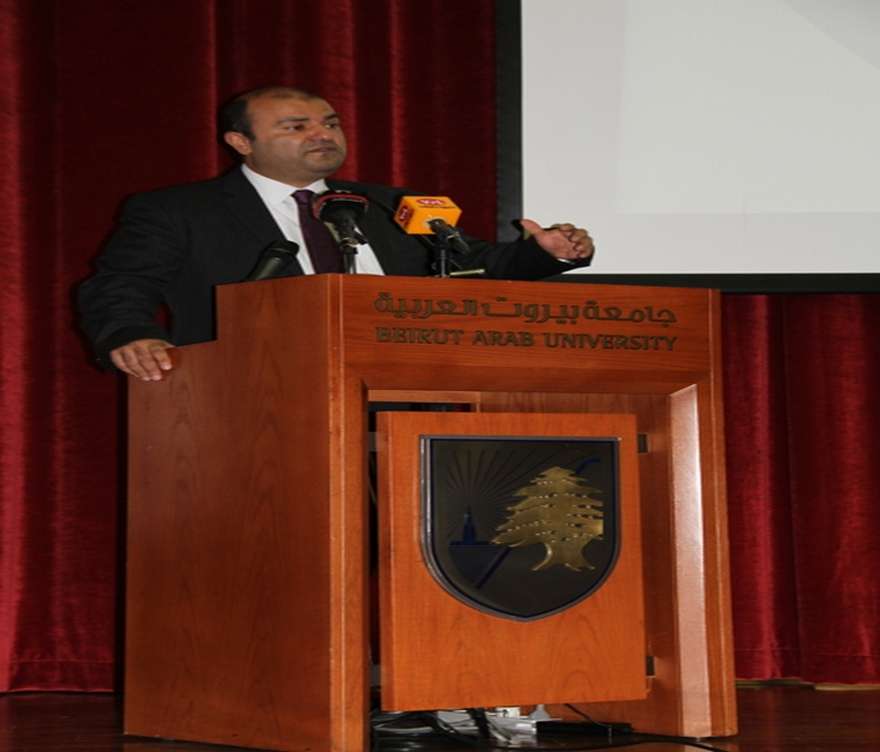
Minister Ghazi El Aridi at BAU
13 December 2013Under the auspices and with the attendance of HE Minister of Transportation and Public Works, Mr. Ghazi El Aridi, the Faculty of Business Administration at BAU organized a seminar entitled “Supply Chain Management in the Middle East: Opportunities and Challenges”. The seminar aimed at exploring the concept of supply chain management as a strategic management concept that contributes to the enhancement of the efficacy of businesses in transportation, storage and logistics.
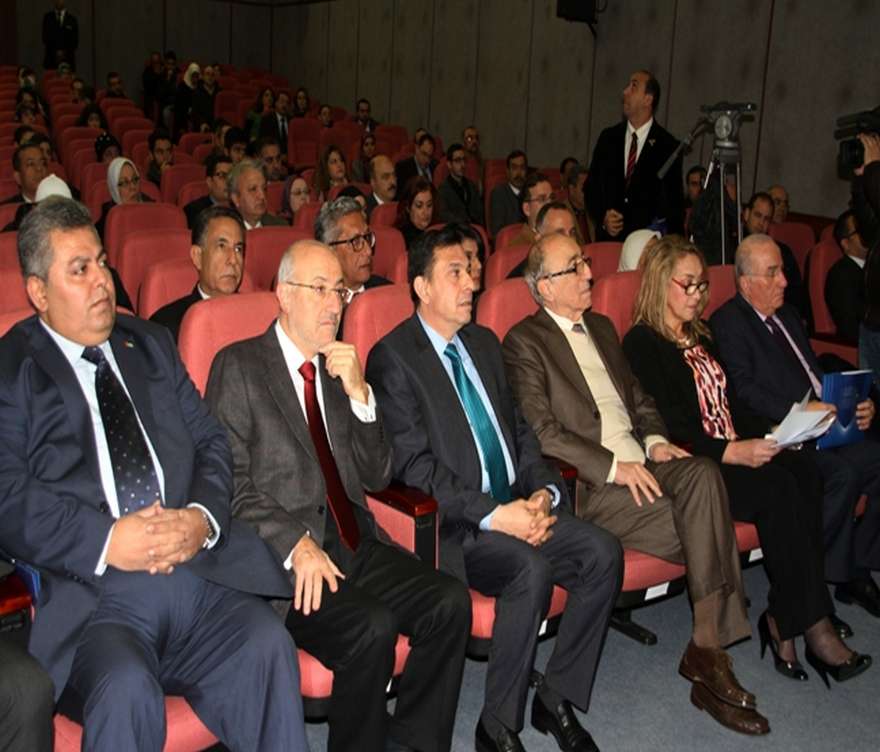
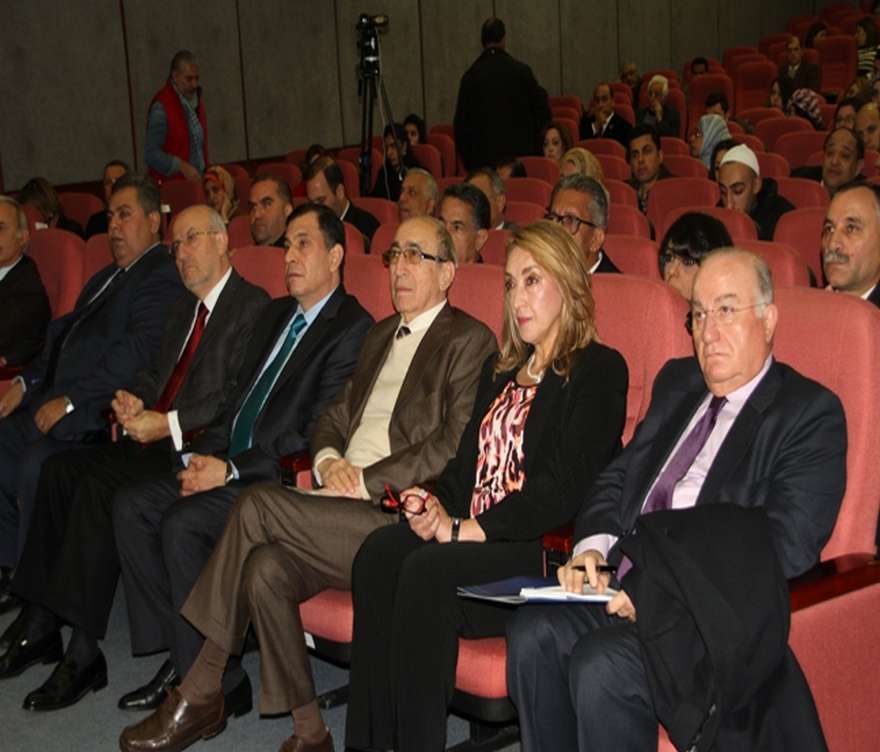
The event that was held on the 13th December, 2013 and was attended by Mr. Maher Mshayel, representing Palestinian Ambassador Ashraf Dabour, Dr. Khaled Hanafy, Dean of the Faculty of International Transport and Logistics and the Director of the Commerce and Commodity Exchanges Institute at the Arab Academy for Science, Technology and Maritime Transport representing the President of the Academy Dr. Ismail Abdel Ghaffar, Former Minister Mr. Adel Kortas, members of the Egyptian Embassy in Lebanon, Mr. Abdel Hafiz El Kaissi, General Director of the Directorate of Land and Sea Transport, Prof. Dr. Amr Galal El Adawi, President of BAU BAU , Mr. Issam Houri ,Secretary General, Deans of Faculties, and a crowd of specialists and interested people.
After the Lebanese and the BAU Anthems were played, Minister Ghazi El Aridi stated that the choice of this conference with the announced title in the heart of Beirut through BAU is of great significance at this stage. Similarly, the cooperation with the Arab Academy for Science, Technology and Maritime Transport, which is an expert and a pioneer in this matter, is of great importance, it has greatly assisted Lebanon, and we are proud that the level of cooperation between the Academy on the one hand, and the Ministry of Transport, Lebanese Ports and the concerned authorities has been at its best over recent years.
The Minister added that when speaking of supply chains it presents a simple issue. We have all read about the consequences of the events in Syria in Lebanon, and the fear of the land borders being closed down, as they are the only crossing available to all Arab countries. This issue has been discussed with the economic authorities as well as those working in the land and sea sectors. An emergency plan for maritime transport was developed, and activities were launched from the Port of Beirut that were recently completed. The inauguration of these activities came under the patronage of HE the President. Had we not made this reading and taken the necessary measures, we would have faced a tremendous financial and economic crisis.
The Minister added that he takes this opportunity to express his appreciation of the Egyptian Ministry of Transport, which cooperates with the Academy, thus establishing a tripartite cooperation. It is his hope that a new agreement for maritime transport would be signed between Lebanon and Egypt. To avoid the repercussions of the events in Syria, transport is now conducted via the port of Tripoli to other Arab countries, whether through Turkey or Egypt. This has become a necessity to supply the Lebanese economy with the necessary lifeline and the basic needs, which cannot be achieved except through a network of cooperation between governments on the one hand and the ports on the other. There is also a need to facilitate required procedures and to handle matters with a degree of flexibility.
In addition, it is necessary to act fast, since time is not on our side. Borders are collapsing and laws are being violated. Countries may fall, if not even regimes. Entire bodies may fall, maps may change, and there may be no safe movement of what our societies need. There are supply chains of fighters and extremists who seek to come from here and there to fight on open battle fields, where there are no borders of logic, reason, wisdom or insightfulness to tell us where we are heading.
In conclusion the Minister expressed support of such chains of communication between states, governments, institutions, academies, scholars, experts and energies towards the advancement of our societies and to serve humans.
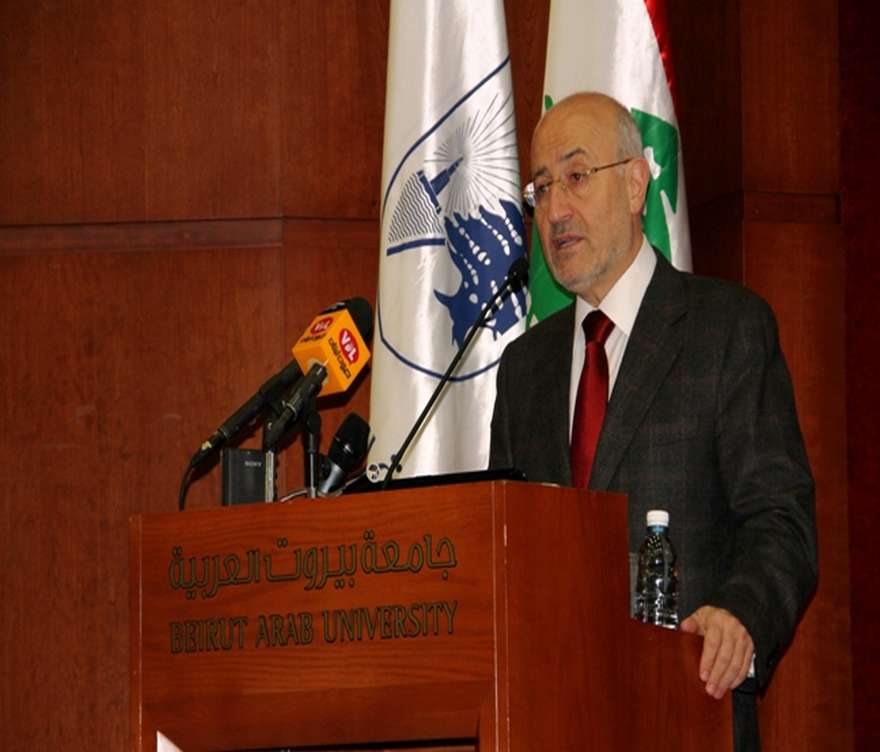
In his word, Prof. Dr. Amr Galal El Adawi, President of BAU, pointed out that in the light of BAU’s constant observation of job-market needs, the Faculty of Business Administration has introduced a new MA program specializing on supply chain management, in collaboration with Arab Academy for Science, Technology and Maritime Transport. The new program aims to enhance students’ job-opportunities through providing graduates with a cutting-edge. The field is of growing importance on the job-market, and is, together with other newly-introduced disciplines, a distinctive addition to BAU in its path towards excellence.
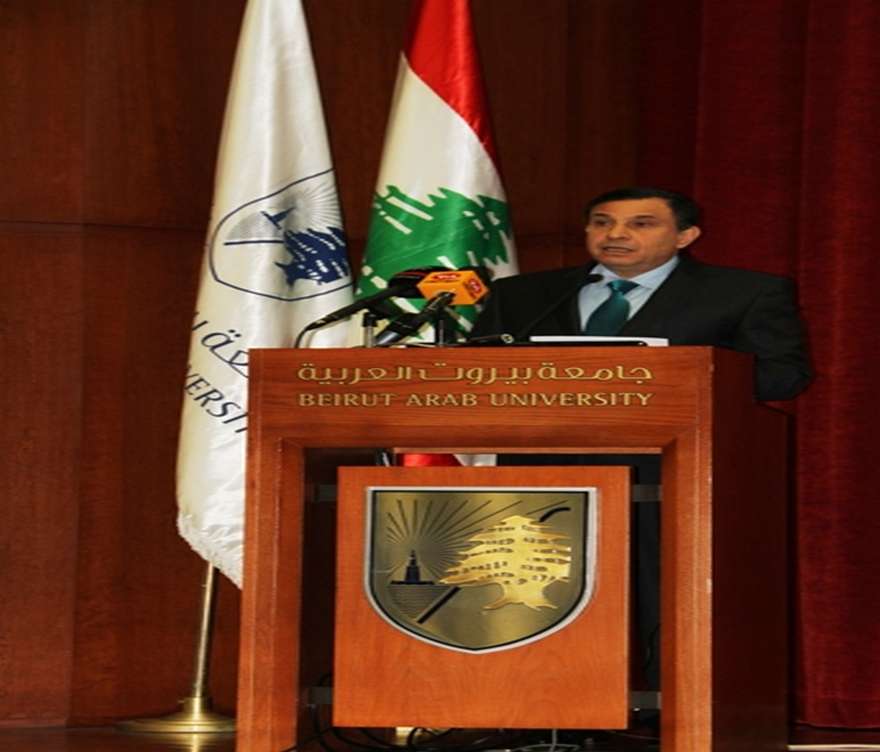
The Dean of the Dean of the Faculty of International Transport and Logistics and the Director of the Commerce and Commodity Exchanges Institute at the Arab Academy for Science, Technology and Maritime Transport Dr. Khaled Hanafy then spoke, stating that this event comes as part of the agreement concluded between the Academy and BAU, thus presenting one of the applications relevant to the development of production chains. The field has no doubt become a significant element of competitiveness between states, organizations and businesses, and hence between individuals in the age of globalization.
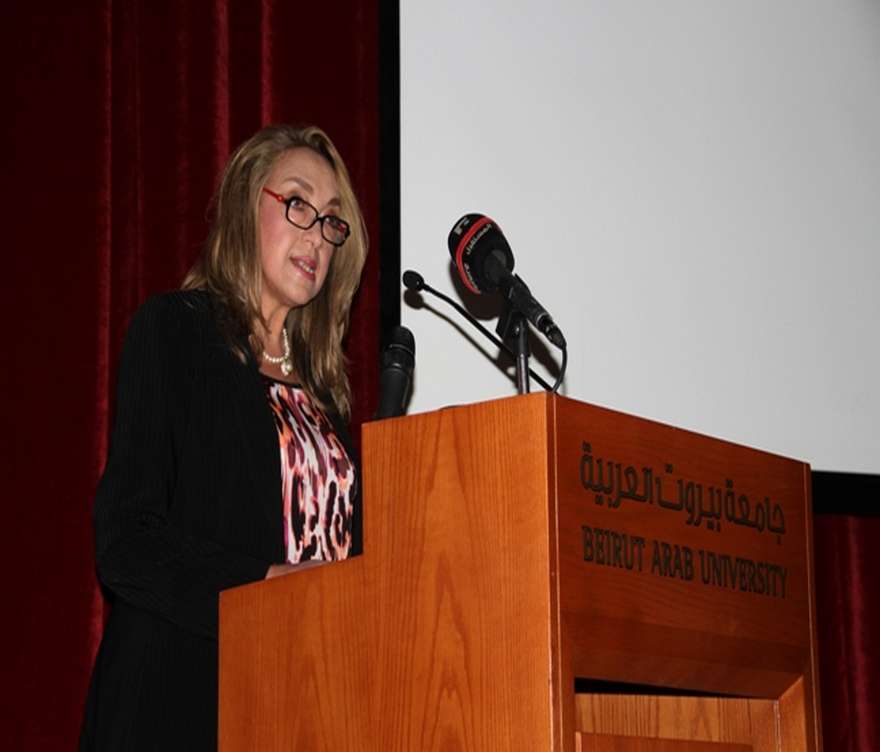
Prof. Dr. Nehal Mostafa, Dean of the Faculty of Business Administration at BAU pointed out that the essence of supply chain management is to establish a balance between supply and demand by coordinating between companies, which creates a high-performance model for business administration.
It is worth noting that the Faculty of Business Administration has already launched the registration process for the MBA in Supply Chain Management, in collaboration with Arab Academy for Science, Technology and Maritime Transport. This degree consists of four semesters, and accepts students from all fields of specialization. The program seeks to quality holders of this MBA to work in a number of sectors, including the governmental sector, transport, hospitals, trade, military institutions, etc.