

A Lecture delivered by the TV Journalist Walid Abboud at Beirut Arab University
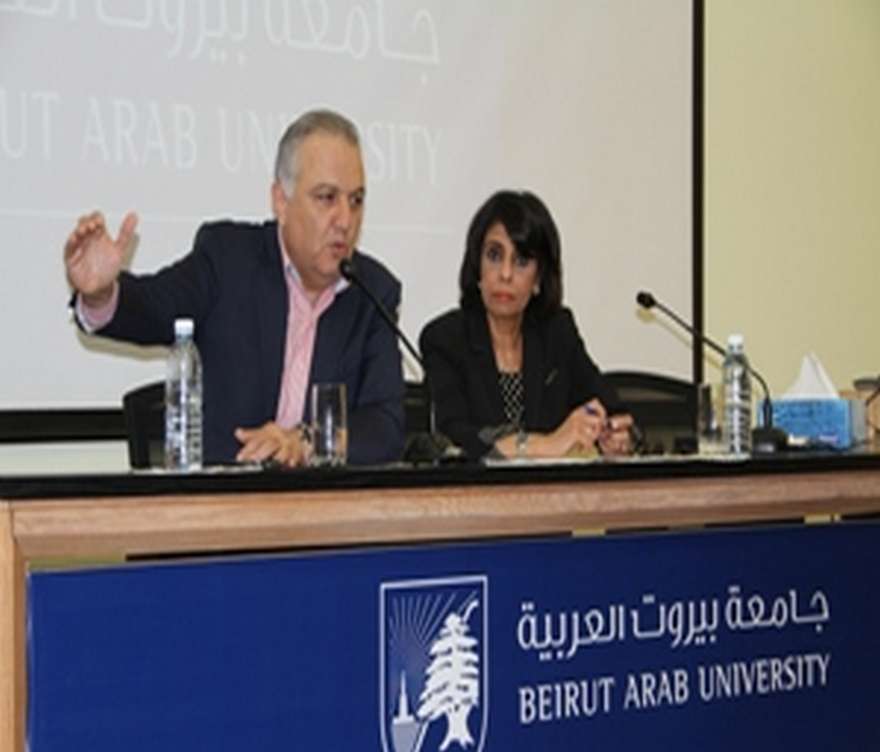
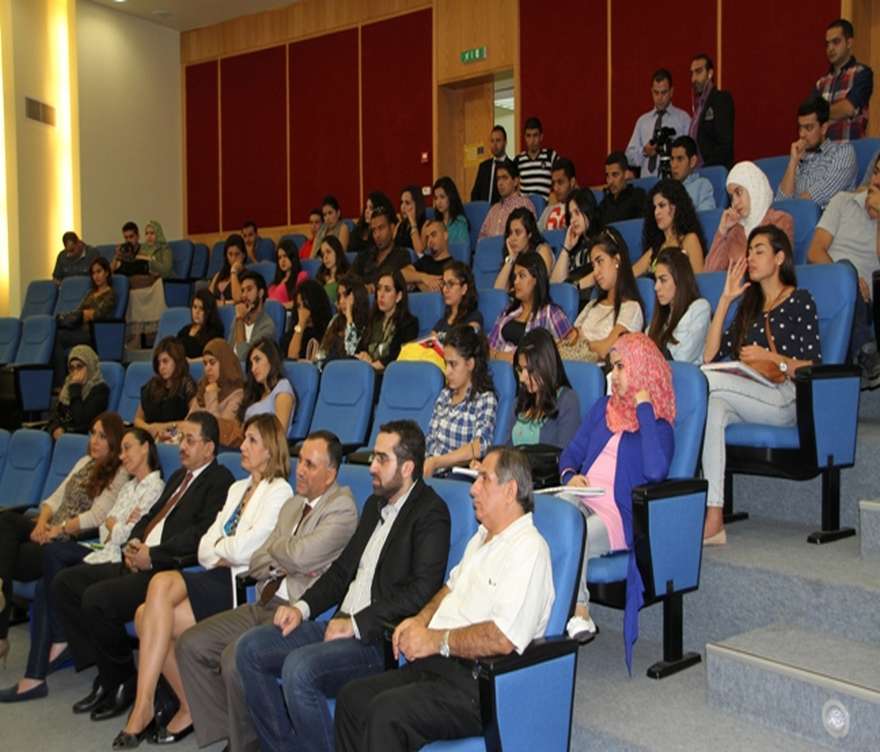
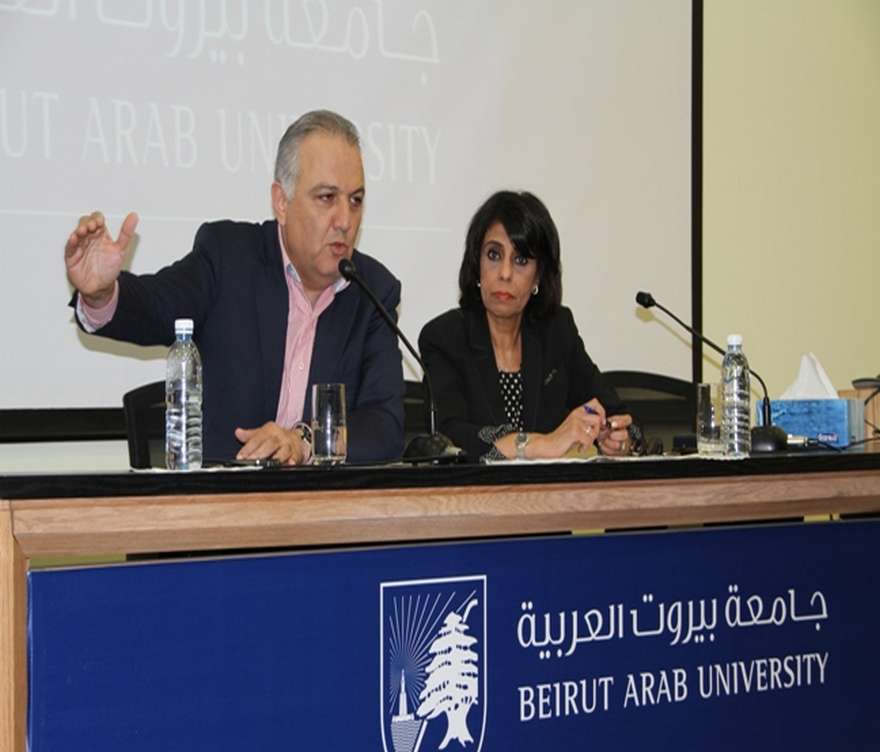
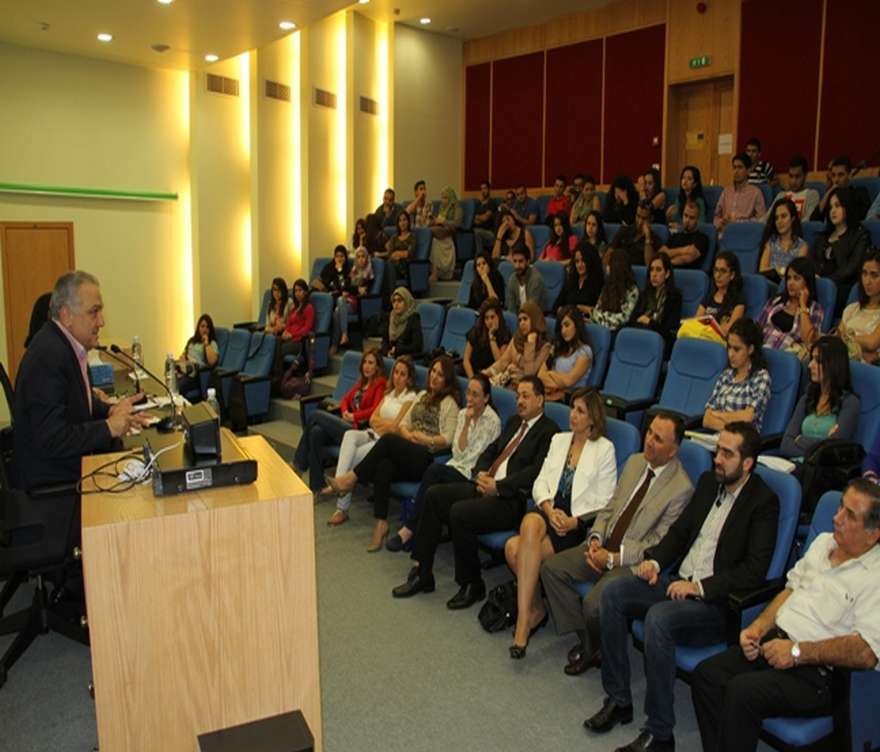
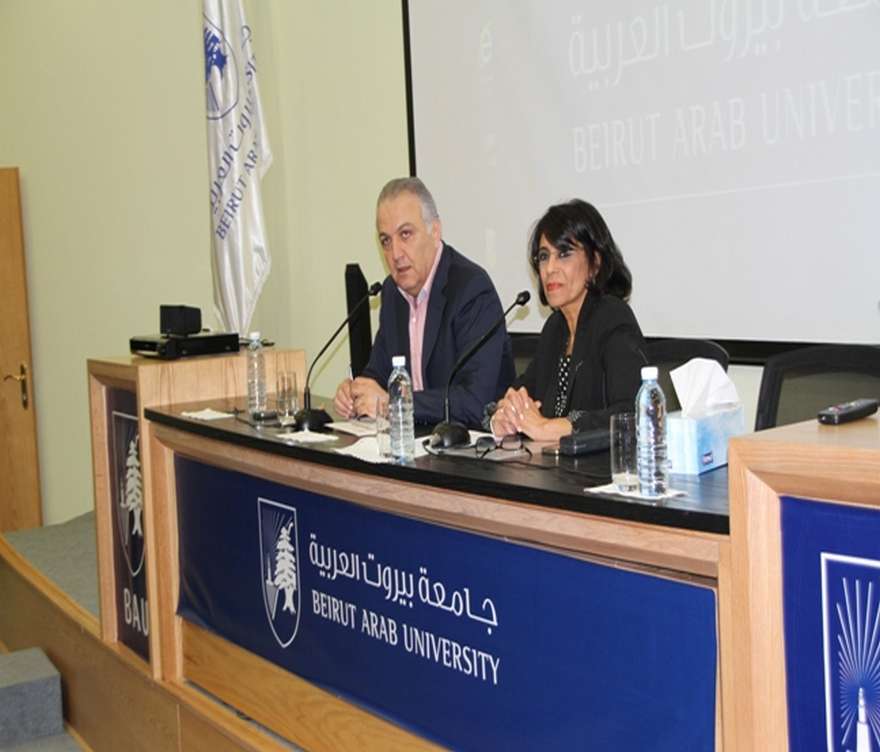
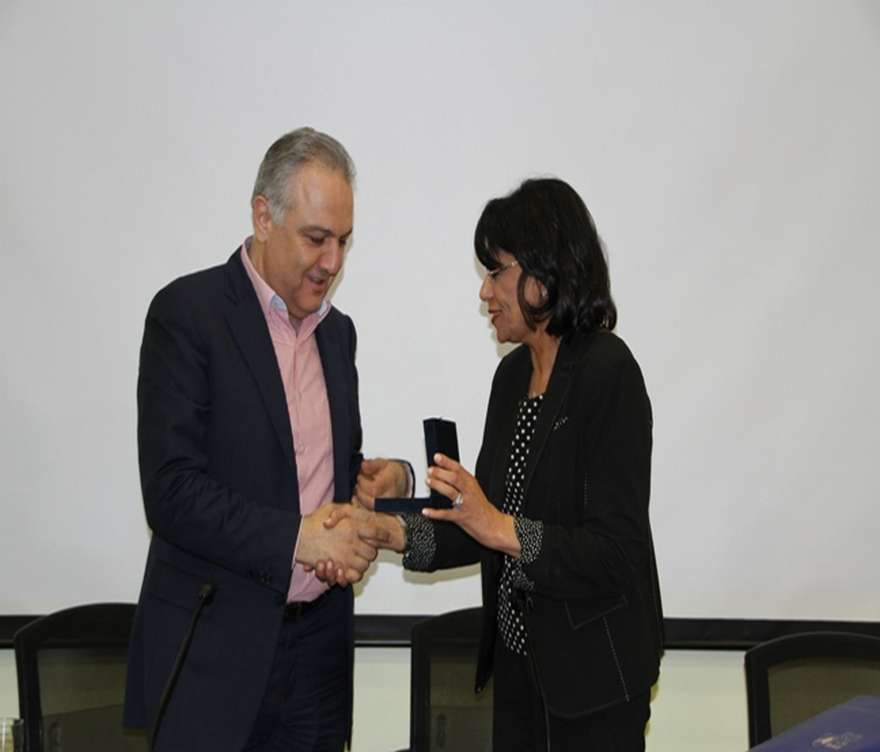
30 October 2013The Faculty of Arts at Beirut Arab University hosted the Journalist Walid Abboud in a lecture and a Panel Discussion on the 30th of October, 2013 entitled “The Media Between Reality and Future Expectations”. The event was attended by Prof. Dr. Mayssah El Nayal, Dean of the Faculty, Prof. Dr. Sobhi Abou Shahine, Dean of Students’ Affairs, Dr. Gamal Megahed, in addition to a crowd of students and a number of staff members at the Faculty.
The event was opened by Prof. El Nayal, who highlighted the predominance of the concept of media responsibility in combating the problems of society through the presentation of the diverse public concerns arising in crises. Reviewing Abboud’s career, the Dean emphasized on his role in safeguarding this trend, describing him as an outstanding anchor and distinctive interviewer, who has a rich background in political knowledge and a refined sense of nationalism. The Dean further highlighted Abboud’s experiences in journalism and visual media. Announcing the launching of a Vocational Diploma in Journalism at the Faculty, the Dean invited Abboud to join the academic staff teaching the diploma.
Walid Abboud then took the floor, drawing attention to the fact that in reality the media is diverging from what is taught in media curricula, indicating that working in the media transgresses, intentionally or unintentionally, all principles. Abboud argued that the failure of the media to meet future expectations is the sever political division that converts a news item into a point of view. He further criticized the fact that the introductions of some news bulletins become partisan statements.
Abboud also highlighted that the deteriorating financial conditions of media institutions has driven these institutions to elicit the support of politicians, political parties or embassies. Explaining the consequences of taking such a step, he pointed out that these institutions then find themselves committed to certain political agendas or tendencies. He also stressed the fact that funds raised from advertisements does not cover but half of the institutional needs.
Abboud also discussed the out-dated legal codes that regulate the Lebanese media, some of which date back to the time of the French Mandate. Further, Abboud pointed out that the National Council for Media fails to hold media accountable due to existing political divisions. He argued that a media-person in Lebanon belongs to one of the most insecure professions the members of which may find themselves facing arbitrary dismissal at any moment. He expressed his hopes that a syndicate for audio-visual media would be established to provide media-people with a sense of security that is not necessarily politicized.
At the end, Dr. Gamal Megahed hailed Abboud’s honesty and objectivity in his approach, highlighting his full agreement as an academic with Abboud’s talk.
The event closed with a discussion during which the students posed questions and queries that were addressed by Abboud.